Leave Your Message

Top 10 Fuse Cutout Glass Isolator Suppliers Worldwide

Global power networks are expanding, modernizing, and facing sharper reliability demands. The International Energy Agency’s Electricity 2024 report forecasts average global electricity demand growth of about 3.4% annually through 2026. That growth increases pressure on distribution systems, especially in rural feeders, industrial parks, and renewable-energy connections.

A Fuse Cutout Glass Isolator can provide visible isolation and overcurrent protection on medium-voltage lines. Its value depends on more than a catalog rating. Buyers should examine dielectric strength, creepage distance, interrupting capacity, glass quality, corrosion resistance, and field-service history. IEC 60282-2 remains an important reference for expulsion fuse systems. Meanwhile, IRENA’s Renewable Capacity Statistics 2025 reports approximately 585 GW of renewable capacity added worldwide in 2024. More distributed generation means more switching points and more demanding equipment choices.

This guide reviews ten worldwide suppliers using practical criteria. These include product certification, manufacturing experience, test facilities, delivery capability, and after-sales support. Supplier rankings are never perfectly universal. Regional voltage practices, utility specifications, climate exposure, and procurement rules can change the result. A supplier trusted in Australia may not fit a coastal African project. That matters.

Market reports also differ in their definitions and forecasts. Some group cutouts with broader switchgear categories, which can obscure product-level comparisons. Therefore, this overview avoids treating market size alone as proof of quality. It focuses on evidence buyers can verify: published test data, consistent dimensions, traceable materials, and documented installations. The strongest supplier is not always the largest. Field performance should decide.

Top 10 Fuse Cutout Glass Isolator Suppliers Worldwide

Definition and Role of Fuse Cutout Glass Isolators

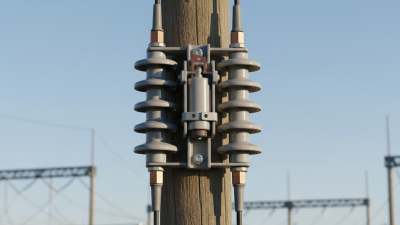
A fuse cutout glass isolator is an overhead distribution component that supports energized parts and separates a faulty circuit. Its glass body provides electrical insulation between the conductor and the grounded mounting structure. The fuse link performs the interruption. The glass does not normally clear the fault itself. When excessive current melts the fuse link, the drop-out assembly opens and creates a visible isolation point for maintenance crews. This improves operational safety during line work and equipment replacement.

Its performance depends on dielectric strength, creepage distance, weather resistance, and mechanical stability. Clear glass can help technicians identify cracks, chips, contamination, or internal damage during inspections. A small surface mark may matter. Salt, dust, moisture, and industrial pollution can encourage leakage current across the surface. Technicians should check terminal tightness, contact alignment, fuse condition, and signs of heat discoloration. Cleaning methods must suit the manufacturer’s material guidance, because careless tools can damage the glass.

The term “glass isolator” is not perfectly standardized worldwide. Some suppliers may describe the complete fuse cutout, while others refer only to the glass insulating body. Buyers should confirm voltage class, continuous current, interrupting rating, creepage requirements, mounting dimensions, and tested environmental performance. Reliable suppliers provide inspection records, material traceability, installation guidance, and repeatable quality controls. Field experience still matters. Even a well-tested unit can fail early when poor fittings, incorrect fuse links, or neglected inspections are involved.
Key Technical Standards and Performance Requirements

Selecting fuse cutout glass isolators requires more than comparing voltage and price. Suppliers should demonstrate compliance with relevant standards, including IEC 60282-2 and applicable ANSI C37.41 or C37.42 requirements. These standards address fuse performance, testing, insulation coordination, and interrupting capability. Always confirm the exact edition and local utility specification.

Key ratings include maximum system voltage, continuous current, interrupting current, power-frequency withstand, and lightning impulse withstand. Creepage distance matters in coastal, dusty, or industrial areas. Glass insulation should resist thermal shock, ultraviolet exposure, moisture, and mechanical loading. Contacts must maintain stable pressure without excessive heating. In field inspections, loose hardware and poor alignment often cause trouble before the fuse element fails. A catalogue rating can look excellent, yet installation quality may reduce real performance.

Tips: Request certified test reports, routine inspection records, and dimensional drawings. Check clearances after mounting, not only on paper. Ask how the supplier controls glass defects and contact plating. Review corrosion resistance for your climate. Do not assume every “standard” model fits every network; regional practices differ. One overlooked detail is replacement compatibility. Test samples under realistic temperature and pollution conditions when possible. It may be worth challenging a perfect-looking specification, because small assumptions can become costly maintenance problems.

How to Evaluate Global Fuse Cutout Suppliers

Top 10 Fuse Cutout Glass Isolator Suppliers Worldwide

How to Evaluate Global Fuse Cutout Suppliers

Global grid investment is entering a demanding phase. The International Energy Agency reported that annual grid spending may need to exceed 600 billion dollars by 2030, nearly double current levels. IRENA recorded 473 GW of renewable capacity additions in 2023. These figures increase demand for dependable medium-voltage protection equipment, including glass-insulated fuse cutouts.

Evaluate suppliers through documented evidence, not polished catalogs. Request type-test reports aligned with IEC 60282-2, production certificates, dimensional drawings, and material specifications. Check rated voltage, interrupting capacity, creepage distance, contact pressure, and corrosion performance. A sample should fit securely on the intended pole hardware. It should also operate smoothly after repeated manual movements.

Traceability matters.

Ask for batch numbers, inspection records, and calibration dates. Verify whether glass components receive thermal-stress testing and weathering evaluation. For coastal projects, request salt-fog data rather than general claims. UL, IEC, or national approvals may not cover every configuration, so read the scope carefully.

Compare five-year cost, not only purchase price. Include freight, spare units, testing, storage, and replacement labor. Supplier audits should examine process control, packaging, lead-time history, and failure reporting. A factory video is useful, but it proves little alone. I would also order a small trial batch before a large contract. This adds effort, yet one overlooked fit problem can delay an entire feeder. Supplier ranking remains imperfect when field-failure data is unavailable.

Top 10 Fuse Cutout Glass Isolator Suppliers Worldwide

Top 10 Fuse Cutout Glass Isolator Suppliers Worldwide

The top 10 fuse cutout glass isolator suppliers worldwide are judged by more than product availability. Utility engineers examine glass quality, insulation strength, sealing performance, and mechanical durability. In field maintenance, small cracks often reveal serious manufacturing weaknesses. Reliable suppliers provide traceable materials, controlled firing processes, and clear inspection records. They also support voltage ratings suited to regional grid conditions.

A strong supplier should offer stable performance under rain, salt fog, dust, and sudden temperature changes. Testing may include dielectric withstand, thermal cycling, mechanical loading, and short-circuit evaluation. Compliance with recognized IEC or ANSI requirements improves confidence, but certificates alone are not enough. Buyers should review test dates, laboratory competence, and production consistency. Spare parts and technical responses also matter during urgent repairs.

The top 10 list should therefore reflect practical value, not marketing volume. Some suppliers provide excellent glass components but weaker documentation. Others communicate well yet lack flexible production capacity. No ranking is perfect. Site conditions can change the preferred choice. Engineers should compare failure history, delivery reliability, warranty terms, and installation feedback before purchasing. A clear product drawing helps prevent mismatched hardware. So does an honest discussion about limitations. Supplier claims deserve verification.

Top 10 Fuse Cutout Glass Isolator Suppliers Worldwide

Rank Primary Supply Region Typical Product Scope Rated Voltage Range Continuous Current Interrupting Capacity Insulator Material Common Standards Typical Applications
1 East Asia Outdoor expulsion fuse cutouts with glass or porcelain insulator bodies 11–36 kV 100–200 A 6–12.5 kA, model dependent Toughened glass or porcelain IEC 60282-2; IEC 62271 series Pole-mounted distribution transformers and feeders
2 South Asia Drop-out fuse assemblies for overhead medium-voltage networks 11–33 kV 100–200 A 8–12 kA, model dependent Glazed porcelain; glass options available IEC 60282-2; relevant national utility specifications Rural distribution lines and transformer protection
3 Southeast Asia Weather-resistant fuse cutouts for tropical outdoor installations 12–36 kV 100–200 A 8–12.5 kA, model dependent Toughened glass or high-strength porcelain IEC 60282-2; IEC 60071 insulation coordination Coastal substations, plantations, and industrial feeders
4 Europe Medium-voltage fuse isolators and cutout assemblies for utility networks 10–36 kV 100–200 A Up to approximately 12.5 kA, model dependent Porcelain or glass; polymeric options may also be specified IEC 60282-2; IEC 62271-1 Distribution substations and overhead medium-voltage circuits
5 North America Expulsion-type cutouts with replaceable fuse links 7.8–27 kV 100–200 A Typically 8.3–12 kA, design dependent Porcelain or glass-reinforced insulating components IEEE C37.41; IEEE C37.42; ANSI utility requirements Overhead distribution transformers and lateral protection
6 Latin America Outdoor cutout fuse disconnectors for utility and industrial distribution 13.2–34.5 kV 100–200 A 6–12 kA, model dependent Porcelain or toughened glass IEC 60282-2; IEEE C37.41 where specified Agricultural networks, mining sites, and urban feeders
7 Middle East High-creepage outdoor fuse cutouts for hot and dusty environments 11–36 kV 100–200 A 8–12.5 kA, model dependent Glazed porcelain or glass with increased creepage distance IEC 60282-2; IEC 60815 for pollution considerations Desert substations, water facilities, and industrial plants
8 Africa Robust drop-out fuse isolators for expanding overhead networks 11–33 kV 100–200 A 6–12 kA, model dependent Porcelain or glass IEC 60282-2; local utility technical schedules Rural electrification, mini-grids, and transformer protection
9 Oceania Utility-grade fuse cutouts for exposed coastal and bushfire-prone areas 11–33 kV 100–200 A 8–12.5 kA, model dependent Porcelain or toughened glass IEC 60282-2; AS/NZS utility requirements where applicable Rural feeders, renewable-energy connections, and distribution transformers
10 Global OEM and Contract Manufacturing Market Custom fuse cutouts supplied to project-specific electrical specifications 7.8–36 kV 100–300 A, design dependent 6–16 kA, design dependent Glass, porcelain, or specified composite material IEC 60282-2 or IEEE C37.41, depending on destination market Turnkey substations, export projects, and replacement programs

Note: Specifications shown are typical market ranges for medium-voltage fuse cutout assemblies. Final ratings, insulation levels, creepage distances, fuse-link compatibility, and certification requirements must be confirmed against the applicable product datasheet and local utility standard.

Applications, Selection Criteria, and Purchasing Considerations

Fuse cutout glass isolators support reliable protection in overhead distribution networks, transformer connections, and rural feeder lines. They combine visible isolation with fuse-based overcurrent protection. Glass insulation can offer strong weather resistance and clear visual inspection when properly manufactured. In coastal areas, salt deposits demand careful surface design and regular maintenance. Industrial sites may require higher mechanical strength, especially near vibration or heavy equipment.

Selection should begin with system voltage, continuous current, and fault duty. Confirm the interrupting rating, impulse withstand level, and creepage distance. Check the label. The glass body must match the specified insulation class and environmental conditions. Look for corrosion-resistant hardware, secure fuse contacts, and a positive closing mechanism. Thermal performance also matters. A poorly matched fuse can create excessive heat during normal operation. Small details matter.

Purchasing teams should request verified test reports, dimensional drawings, material declarations, and installation instructions. Evaluate supplier experience with similar climates and distribution systems. Ask how production lots are inspected, including glass defects, contact alignment, and operating force. Traceable serial or batch records improve accountability. Delivery capacity, replacement fuse availability, packaging quality, and technical support deserve equal attention. A low unit price may hide higher field costs. I have seen specifications accepted too quickly, then revised after installation problems. That lesson is uncomfortable, but useful. Confirm compatibility with existing poles, conductors, mounting hardware, and utility practices before placing a large order.

Top 10 Fuse Cutout Glass Isolator Suppliers Worldwide: Typical Rating Classes

The chart summarizes commonly specified distribution fuse-cutout voltage classes and representative continuous-current options used in utility, industrial, renewable-energy, and rural distribution networks. Actual availability, interrupting capacity, insulation level, and compliance requirements should be verified against the applicable IEC or IEEE specifications before purchasing. The figures are technical rating references and do not represent supplier market share.