Leave Your Message

2026 Best Fuse Cutout Glass Isolator Manufacturers?

Choosing the right Fuse Cutout Glass Isolator manufacturer can influence safety, service life, and maintenance costs in overhead distribution systems. This 2026 guide examines manufacturers through practical and technical criteria, not marketing claims alone. It considers glass quality, insulation performance, mechanical strength, thermal stability, and manufacturing consistency. It also reviews product ratings, testing procedures, customization capacity, delivery reliability, and after-sales support.

The strongest manufacturers usually provide traceable material records and clear technical datasheets. Look for evidence of routine electrical tests, mechanical load testing, weathering evaluations, and dimensional inspections. Details matter. A poorly finished fitting, uneven glass surface, or weak connection point may create problems during installation or harsh weather. Field experience also shows that compatibility is essential. Voltage class, current rating, fuse-link dimensions, mounting hardware, and local grid conditions must match the application.

Not every supplier deserves equal confidence. Some publish impressive specifications but offer limited test evidence. That weakness deserves attention. Independent certification and documented quality systems can improve purchasing confidence, but they should not replace engineering review. This comparison aims to identify reliable 2026 manufacturers while recognizing that regional standards and project requirements differ. No ranking is perfect. Buyers should confirm current certificates, factory capabilities, sample performance, and warranty terms before placing large orders. A careful decision begins with verified data, responsive technical communication, and products proven under real operating conditions.
2026 Best Fuse Cutout Glass Isolator Manufacturers?

What Is a Fuse Cutout Glass Isolator? Key Parts and 11–36 kV Ratings

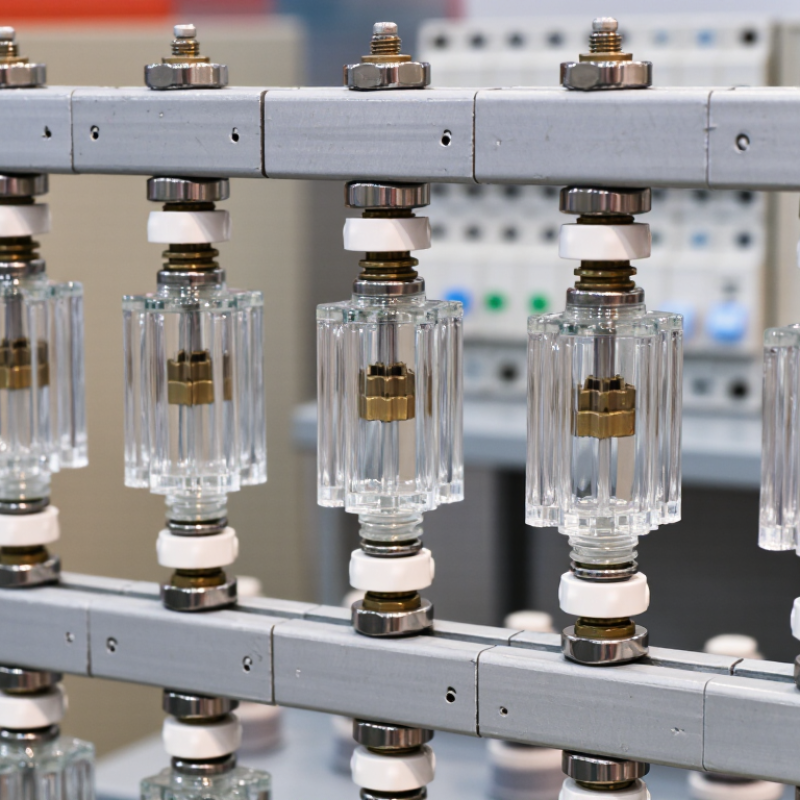
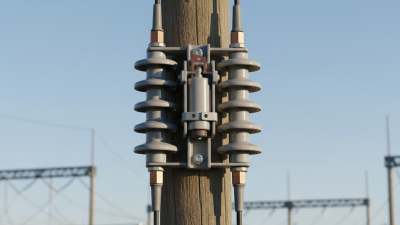
A fuse cutout glass isolator combines switching, insulation, and overcurrent protection on medium-voltage overhead networks. Its glass or glass-based insulating body supports live components and maintains electrical clearance. The cutout tube holds the fuse link, while terminal clamps connect the conductor and transformer lead. Hinges, contacts, and a pull ring allow controlled operation and visible isolation.

Common system ratings include 11, 12, 15, 24, 27, 33, and 36 kV. The correct choice depends on system voltage, continuous current, short-circuit capacity, and insulation level. Check the rated maximum voltage, power-frequency withstand, lightning impulse withstand, and interrupting rating.

A 33 kV application may require different clearances and coordination than an 11 kV feeder. Outdoor pollution, salt, dust, altitude, and rainfall also affect performance.

Field experience shows that voltage alone is not enough. Sometimes, the overlooked current rating causes the real problem.

Tips: Confirm the network’s actual phase-to-phase voltage before ordering. Match the fuse link curve with transformer inrush and fault protection. Inspect glass surfaces for chips, haze, or tracking marks. Verify contact pressure after installation. Use certified test records and installation instructions. Selection can still be imperfect when site data is incomplete, so record temperature, pollution, and fault levels before final approval.
Which IEC 60282-2 Requirements Define Safe Fuse Cutout Performance?

For buyers comparing 2026 fuse cutout glass isolators, IEC 60282-2 is more useful than a polished catalog photograph. It addresses high-voltage expulsion fuse performance, including rated voltage, insulation levels, current ratings, and breaking behavior. A safe device must interrupt the specified fault current without dangerous external discharge, structural failure, or uncontrolled flame. Numbers matter.

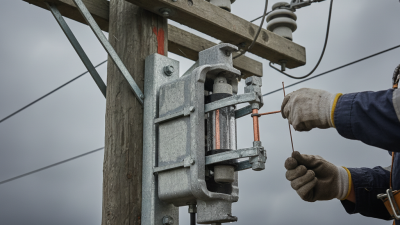
During technical review, request type-test evidence covering dielectric withstand, temperature-rise, mechanical operation, and interruption tests. Verify the declared maximum and minimum interrupting currents, because a cutout may behave differently at smaller fault levels. Time-current characteristics should match the selected fuse link and the protected transformer or feeder. The holder must maintain contact pressure, alignment, and reliable drop-out action after repeated operations. In field inspections, check hinge wear, contamination, cracks in the insulating body, and damaged arc-extinguishing parts. Small defects grow.

IEC 60282-2 compliance does not replace correct installation. System voltage, short-circuit calculations, coordination, altitude, pollution, and local electrical rules still require engineering judgment. Ask whether testing used the same fuse-link family, mounting arrangement, and environmental conditions expected on site. This is where comparisons become uncertain. A certificate may be genuine, yet incomplete for your application. Request test dates, ratings, laboratory identification, and stated limitations before approving a manufacturer. Good documentation supports inspection, but it cannot replace it.

How Do 100–200 A Ratings and Breaking Capacity Compare by Manufacturer?

For 2026, glass fuse cutout isolators should be compared by two separate figures: continuous current and breaking capacity. A 100 A unit carries less operating load than a 200 A unit. It does not automatically provide weaker fault protection. Breaking capacity shows the maximum fault current the device can interrupt safely, usually stated in symmetrical amperes.

In current distribution specifications, 100 A and 200 A models commonly show interrupting ratings from 8,000 A to 12,000 A. Some designs reach 16,000 A, but only under defined voltage, power-factor, and test conditions. Numbers can mislead.

IEC 60282-2 addresses high-voltage fuse performance, while IEC 62271-102 covers isolating and earthing functions. A serious comparison checks both standards, not just the front-label amperage.

The IEA Electricity 2024 report forecasts global electricity demand to grow by an average 3.2% annually through 2026. That growth increases pressure on aging distribution networks and makes verified fault performance more important.

In field inspections, I would examine contact temperature rise, fuse-link coordination, creepage distance, and the glass or porcelain body’s condition. Manufacturer datasheets should identify rated voltage, breaking current, test duty, and altitude correction.

A 200 A cutout with a 10 kA rating may be less suitable than a 100 A model rated at 16 kA. This is where simple ranking fails. Installation fault studies still decide the safer choice.

Which Glass, Creepage Distance, and Pollution-Class Metrics Matter in 2026?

In 2026, glass selection for fuse cutout isolators should start with outdoor exposure, not price. Toughened soda-lime glass offers stable dielectric performance and visible damage after puncture. However, glass is not automatically safer. Manufacturing quality, thermal shock resistance, and edge protection remain critical.

IEC 60815-1:2020 identifies four reference specific creepage distances: 16, 20, 25, and 31 mm/kV. These values correspond broadly with light, medium, heavy, and very heavy pollution conditions. The correct figure depends on salt deposits, industrial dust, rainfall, and service voltage. CIGRE Technical Brochure 518 also stresses site pollution testing and profile selection. A coastal installation may need more creepage than a dry inland site.

Manufacturers should publish creepage distance, arcing distance, glass composition, mechanical load, and tracking resistance. They should also explain test conditions. A 25 mm/kV design can fail when pollution is underestimated. That mistake is common. Field engineers should inspect hydrophobicity claims carefully, because glass surfaces do not behave like polymeric materials. Altitude correction, ultraviolet exposure, and temperature cycling deserve separate verification. Independent type-test reports based on IEC 62271-102 and relevant utility specifications provide stronger evidence than marketing tables. A small gap in documentation can become a large maintenance problem.

How Can Buyers Rank the Best Fuse Cutout Glass Isolator Manufacturers?

How can buyers rank the best fuse cutout glass isolator manufacturers in 2026? Start with evidence, not attractive catalogs. Review glass composition, mechanical strength, insulation performance, and resistance to heat and moisture. Ask for current test reports from qualified laboratories. Check whether each report matches the exact product model, not a similar sample.

A serious manufacturer should explain its production controls clearly. Look for batch records, raw material traceability, dimensional inspection, and routine electrical testing. Experienced suppliers can describe how isolators perform in coastal, dusty, or freezing environments. Request samples and inspect the surface closely. Small cracks, uneven glazing, or rough edges may reveal weak process control. A polished brochure is not proof.

Buyers should also rank delivery reliability and technical support. Compare realistic lead times, packaging methods, replacement procedures, and response speed. Speak with users who installed the products under similar voltage and weather conditions. Their maintenance records can expose problems that laboratory tests miss.

Price deserves attention, but the lowest offer may hide thinner materials or inconsistent quality. No ranking method is perfect. Even experienced buyers can overvalue paperwork and overlook field behavior. A practical scorecard should balance safety evidence, manufacturing discipline, application experience, communication, and long-term supply stability.