Leave Your Message
-
Phone
-
E-mail
-
Whatsapp
-
Wechat

Choosing the right Low Voltage cable is not a catalog exercise. It is a practical decision shaped by the load, cable route, surroundings, and equipment. A cable that works on a short indoor run may perform poorly over a longer distance or in a hot, damp space. Small details matter. A crowded conduit, a sharp bend, or a warm cabinet can affect the choice.
Electrical educator Mike Holt teaches that conductor selection depends on the circuit’s real conditions, not guesswork. In paraphrase: “Match the conductor to the load, distance, and installation environment.” Treat that as a starting point, not a substitute for verified specifications. Check current capacity, voltage drop, insulation rating, conductor material, and compatibility with terminals. Then consider how the cable will be installed and protected. The right answer can change when the route changes.
This guide explains how to compare those factors, read cable markings, and avoid common selection mistakes. A tape measure, equipment label, and clear route sketch can reveal useful details before purchase. Still, planning is not perfect. A route may change; a label may be unclear. Pause and verify uncertain ratings with the manufacturer or a qualified electrical professional. Careful checks help make the final choice safer, more reliable, and better suited to its actual job.
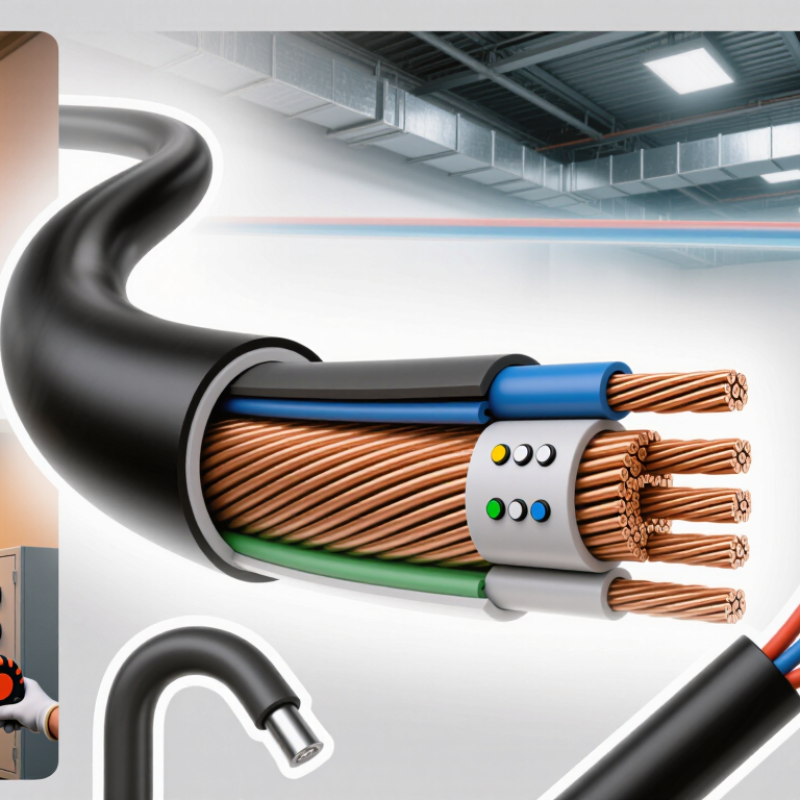
How to Choose the Right Low Voltage Cable
Define the Application and Operating Requirements
Start with the actual load and where the cable will run. Record voltage, expected current, duty cycle, circuit length, and whether the load starts with a surge. A cable inside a warm control cabinet faces different conditions from one buried outdoors. Note moisture, chemicals, vibration, sunlight, and nearby heat sources. Small details matter.
Then check installation conditions before selecting conductor size and insulation. IEC 60502-1 specifies common operating-temperature limits of 90°C for XLPE-insulated conductors and 70°C for PVC-insulated conductors. IEC 60228 lists a maximum resistance of 7.41 Ω/km for a 2.5 mm² solid copper conductor at 20°C. That resistance can make voltage drop significant on a long run. These are reference values, not a substitute for checking the specific cable construction, ambient temperature, grouping, and applicable local requirements. A tidy load estimate can still miss an intermittent startup surge.
Tips: Measure the route, not just the straight-line distance. Write down the hottest expected ambient temperature and the number of loaded cables bundled together. Confirm voltage-drop and protection calculations with a qualified electrical professional. I’d recheck the assumptions before ordering; they are easy to underestimate.
| Application | Typical Operating Requirements | Cable Features to Consider | Key Checks Before Selection |
|---|---|---|---|
| Fixed building power circuits | Indoor, stationary installation; building wiring voltage and local electrical-code requirements apply. | Copper or aluminum conductors where permitted; insulation and sheath rated for the installation environment; suitable conductor size and temperature rating. | Load current, installation method, ambient temperature, grouping, voltage drop, overcurrent protection, and required fire or smoke performance. |
| Outdoor or underground power distribution | Exposure to moisture, soil, temperature changes, and potentially mechanical damage; direct burial is acceptable only when the cable is specifically rated for it. | Moisture-resistant construction, suitable outer sheath, and armor or other mechanical protection when required by the installation. | Direct-burial or conduit requirements, soil conditions, water exposure, burial depth, impact risk, and local code approval. |
| Control and instrumentation circuits | Often lower-current signals or control power; may run near motors, drives, or other sources of electrical interference. | Conductor count and size matched to the circuit; twisted pairs or shielding where signal integrity requires it; insulation compatible with the circuit voltage. | Signal type, interference environment, grounding and shield-termination plan, separation from power cables, and circuit voltage-drop limits. |
| Industrial machinery and equipment | May involve vibration, oil or chemical contact, elevated temperatures, abrasion, or intermittent movement. | Flexible or finely stranded conductors where movement is expected; sheath material chosen for the specific oils, chemicals, temperature, and abrasion exposure. | Whether the cable is stationary or continuously flexed, minimum bend radius, motion cycle, connector compatibility, and environmental resistance. |
| Portable tools and temporary connections | Frequent handling, bending, and possible contact with floors or work surfaces; use conditions may vary. | A cable specifically approved for portable or flexible use, with a durable sheath and conductor stranding suited to repeated movement. | Flexibility rating, abrasion and impact exposure, connector and equipment ratings, and whether the cable is approved for the intended temporary-use conditions. |
| Life-safety or essential services | Circuit operation may need to be maintained during a defined fire or emergency condition, as specified by the system design and applicable regulations. | Cable and support system tested or certified for the required fire-performance duty; low-smoke or halogen-related properties where specified. | Required circuit-integrity duration, applicable test standard, installation method, supports, joints, and authority approval. |
Selection note: “Low voltage” limits and cable designations vary by jurisdiction and standard. Confirm the required voltage rating, current capacity, conductor size, installation conditions, and approvals against applicable codes and the cable manufacturer’s technical data before installation.