Global buyers are entering a more demanding Low Voltage market. Electrification is expanding across factories, data centers, commercial buildings, transport infrastructure, and renewable-energy projects. The IEA’s Electricity 2024 report projects global electricity demand to grow by an average of 3.4% annually through 2026. That growth increases demand for circuit breakers, contactors, distribution boards, surge protection devices, smart meters, and energy-management systems.
Small components matter.
A reliable product must handle heat, humidity, overloads, voltage variation, and frequent switching. Buyers also need clear technical documentation, traceable testing, stable supply, and responsive after-sales support. IEC standards remain essential references, especially IEC 60947 for low-voltage switchgear and controlgear, and IEC 60898 for household circuit breakers. Certification alone is not enough. Installation conditions still matter.
Energy efficiency remains central. Fatih Birol, Executive Director of the International Energy Agency, has repeatedly described efficiency as “the first fuel.” His statement explains why modern Low Voltage products increasingly include remote monitoring, adjustable protection, power-quality analysis, and data-based maintenance. These functions can reduce downtime and reveal abnormal energy use before equipment fails.
This market is not perfectly predictable.
Supply chains can change quickly. Product prices can also hide lifecycle costs. A cheaper breaker may require more maintenance, consume more panel space, or lack local technical support. Therefore, this guide evaluates the 2026 leading products through performance, safety, compatibility, availability, and total ownership cost. It also recognizes an uncomfortable point: no single product fits every grid, climate, or building. Careful specification still beats impressive marketing.
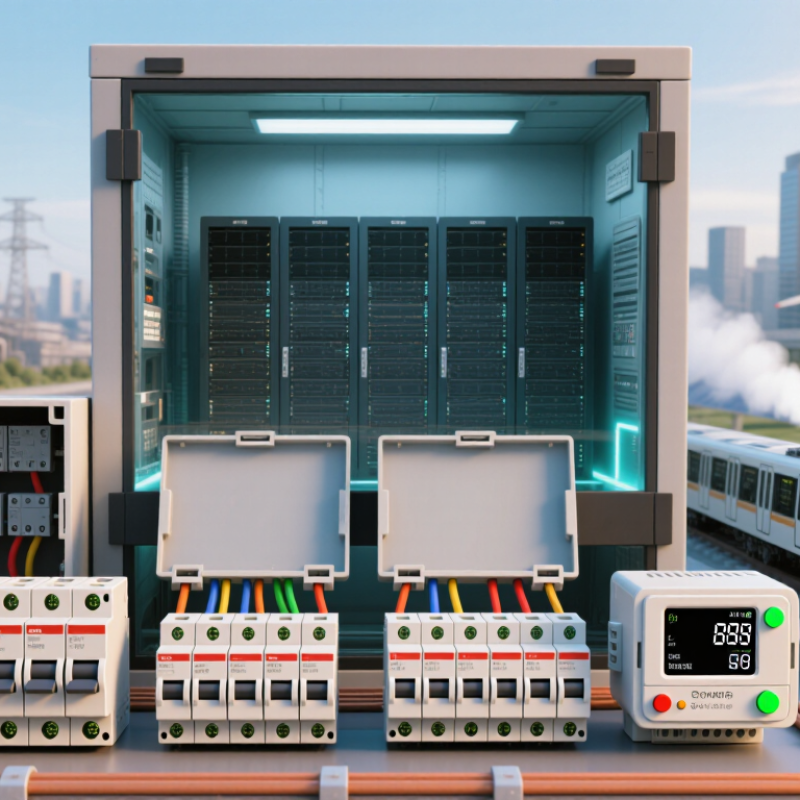
Low voltage is a defined safety boundary, not a marketing label. IEC 61140 places the limit at 1,000 V AC or 1,500 V DC. This threshold covers many building, industrial, renewable-energy, and transport installations. It also shapes product selection, testing, insulation, and installation procedures.
Look for circuit breakers, switchgear assemblies, distribution boards, contactors, surge protective devices, and energy meters. IEC 60947 and IEC 61439 provide useful references for industrial equipment and low-voltage assemblies.
The IEA Electricity 2024 report projected strong global electricity-demand growth through 2026, increasing pressure on reliable distribution equipment. IRENA’s Renewable Capacity Statistics 2025 recorded 585 GW of renewable capacity added in 2024. More generation also means more connection points.
A 1,500 V DC rating does not automatically make a product suitable for every photovoltaic or battery system. Buyers should verify current ratings, short-circuit withstand, pollution level, ambient temperature, enclosure protection, and local certification requirements. Product documentation must match the complete installation, including cables and protective coordination. I sometimes see purchasing teams compare only voltage and price. That approach is incomplete. A technically compliant device can still perform poorly when heat, dust, moisture, or maintenance access is ignored. Regional grid conditions also deserve closer review, because “global” specifications rarely fit every site without adjustment.
2026 Top Low Voltage Products for Global Buyers
MCBs remain essential for household and light commercial circuits. IEC 60898-1 covers circuit-breakers for overcurrent protection in these environments. Buyers should check rated current, voltage, breaking capacity, trip curve, and terminal design. A 16 A, C-curve MCB may suit a lighting or socket circuit, but only after load and cable checks. Short-circuit capacity matters. A compact device is not automatically a safe device.
MCCBs serve larger feeders, industrial panels, and higher fault levels. They generally fall under IEC 60947-2, not IEC 60898-1. RCDs also require separate standards, such as IEC 61008-1 or IEC 61009-1, depending on their configuration. This distinction is easy to miss in product searches. It can cause poor specification. Select residual-current sensitivity according to the installation, equipment, and local rules. Type A may detect pulsating DC residual currents from modern electronic loads. Verification remains necessary.
Tips: Request complete test reports, not only a compliance logo. Compare temperature derating at the actual installation site. Confirm busbar compatibility and tightening torque. Ask whether the stated breaking capacity applies at your operating voltage. I still recheck coordination between upstream and downstream protection, because a neat panel does not guarantee selective tripping. Review the installation manual before purchase.
| Product Category | Applicable IEC Standard | Primary Protection Function | Typical Rated Current (In) | Typical Rated Voltage | Common Pole Configurations | Typical Short-Circuit Rating | Typical Tripping / Residual-Current Characteristics | Common Applications | Key Buyer Verification Points |
|---|---|---|---|---|---|---|---|---|---|
| Miniature Circuit Breaker (MCB) | IEC 60898-1 | Protection against overload and short circuit in AC final circuits | 0.5–125 A | Up to 440 V AC, depending on the product design | 1P, 1P+N, 2P, 3P, 3P+N and 4P | Commonly 4.5, 6 or 10 kA; higher values are available in some ranges | Curve B: approximately 3–5 × In Curve C: approximately 5–10 × In Curve D: approximately 10–20 × In |
Residential distribution boards, lighting circuits, socket outlets and light commercial installations | Check breaking capacity, trip curve, number of poles, terminal capacity, operating temperature and conformity marking |
| Miniature Circuit Breaker for Industrial Use | IEC 60947-2 or IEC 60898-1, according to declared application | Overload and short-circuit protection where higher performance or industrial coordination is required | Up to approximately 125 A | Up to 440 V AC, depending on the product design | 1P, 2P, 3P and 4P | Frequently 10 kA or higher, subject to the declared rating | Thermal-magnetic protection; instantaneous trip characteristics depend on the design | Control panels, commercial buildings, machinery auxiliaries and industrial branch circuits | Confirm whether the product is tested to IEC 60898-1 or IEC 60947-2, and compare Icu, Ics and coordination data |
| Moulded Case Circuit Breaker (MCCB) | IEC 60947-2 | Overload, short-circuit and, where provided, earth-fault protection for feeders and equipment | Typically 16–1,600 A; larger frames are available | Commonly up to 690 V AC | 2P, 3P and 4P | Commonly 18–100 kA at the declared voltage; exact values depend on frame and configuration | Thermal-magnetic or electronic trip unit; adjustable long-time, short-time and instantaneous settings may be available | Main distribution, motor feeders, generator protection, building risers and industrial switchboards | Verify frame size, In, Icu, Ics, Icw where applicable, trip-unit settings, neutral protection and accessory compatibility |
| Residual Current Circuit Breaker Without Overcurrent Protection (RCCB) | IEC 61008-1 | Protection against electric shock and leakage-current hazards; does not provide overload protection | Typically 16–125 A | Commonly 230/400 V AC | 2P and 4P | Not normally assigned an MCB-style short-circuit breaking capacity; upstream overcurrent protection is required | Common sensitivities: 10, 30, 100 and 300 mA Type AC, A, F or B according to the residual-current waveform |
Final circuits, distribution boards, wet-area protection and fire-risk reduction | Confirm residual-current type, sensitivity, time delay, conditional short-circuit rating and upstream protective-device coordination |
| Residual Current Circuit Breaker with Overcurrent Protection (RCBO) | IEC 61009-1 | Combined protection against overload, short circuit and residual current | Typically 6–63 A; some designs extend beyond this range | Commonly 230 V AC for 1P+N and up to 400 V AC for multi-pole configurations | 1P+N, 2P, 3P and 4P, depending on the design | Commonly 4.5, 6 or 10 kA for domestic and light-commercial designs | MCB curves B, C or D; residual-current sensitivities commonly 10 or 30 mA; Types AC, A, F or B | Individual protection of socket, lighting, appliance and outdoor circuits | Check pole switching arrangement, neutral protection, breaking capacity, residual-current type, sensitivity and selectivity |
| Earth-Leakage Relay with External Current Transformer | Application-dependent; protection assemblies may also reference IEC 60947-2 | Monitoring and tripping control for earth-leakage or residual-current faults in higher-current systems | System-dependent; commonly used with feeders above standard RCBO/RCCB ratings | Application-dependent, commonly used in low-voltage AC distribution systems | Typically used with 3P or 4P switching devices | Determined by the associated circuit breaker or switchgear | Adjustable pickup and time delay; suitable for selective protection schemes | Industrial switchboards, data facilities, generators, large feeders and fire-prevention systems | Verify sensor aperture, measuring range, alarm/trip outputs, delay settings, fail-safe behavior and coordination with the breaker |
| Standards note: IEC 60898-1 applies to circuit-breakers for household and similar installations. MCCBs are generally covered by IEC 60947-2, while RCCBs and RCBOs are generally covered by IEC 61008-1 and IEC 61009-1 respectively. Actual ratings, certifications and suitability must be confirmed against the manufacturer’s technical documentation and the target market’s regulatory requirements. | |||||||||
For global buyers, surge protective devices should be judged by evidence, not attractive packaging. IEC 61643-11 testing evaluates performance against temporary overvoltage, impulse current, and protection levels. These tests help confirm whether an SPD can limit dangerous surges in low-voltage AC systems. Look for declared test classes, maximum discharge current, voltage protection level, and short-circuit ratings. Test reports should identify the model, test conditions, and laboratory details clearly.
Installation conditions matter as much as laboratory results. A device near a long cable run may face different surge energy than one inside a compact distribution board. Short, straight connections reduce additional voltage during a surge. Backup protection should also match the installation’s prospective fault current. An SPD can be correctly selected and still perform poorly after careless wiring. That is an uncomfortable but common lesson.
IP ratings under IEC 60529 describe enclosure protection against solids and water. IP20 may suit a clean indoor cabinet, while IP65 offers stronger protection against dust and water jets. However, IP65 does not guarantee resistance to condensation, chemicals, or prolonged outdoor exposure. Buyers should check cable glands, door seals, UV resistance, and drainage details. Ask for inspection records and installation guidance. A rating alone is not enough. Field conditions are rarely perfect, and product selection sometimes needs revision after the first site review.
For global buyers, low-voltage distribution starts with the correct standard, not a catalogue headline. IEC 60502-1 covers power cables with extruded insulation, commonly rated 0.6/1 kV. These cables support building feeders, industrial panels, and outdoor connections. Copper or aluminium conductors affect weight, flexibility, and termination requirements. Check conductor class carefully.
Small details matter.
A practical review should confirm conductor size, insulation material, sheath performance, voltage rating, and test reports. Look for resistance, voltage, and routine test data from a competent laboratory. Installation conditions also change cable capacity. Heat, grouping, soil temperature, and bending space may require derating. A 1 kV cable in a crowded tray can perform differently from the same cable in open air.
Busways require separate attention. They are distribution assemblies, not simply oversized cables. IEC 60502-1 should not be treated as the complete compliance basis for busbar trunking systems; IEC 61439-6 is generally the relevant reference. Ask for enclosure protection, short-circuit withstand, temperature-rise, and joint inspection details. A clean joint matters. I have seen specifications focus on current rating while ignoring site humidity and expansion movement. That is an avoidable weakness. Buyers should compare drawings, installation instructions, certificates, and after-sales technical support before approving supply. Generated documents can look precise, but missing test conditions still leave uncertainty.
Global low-voltage buyers face rising demands for safer, more adaptable equipment. The International Energy Agency’s Electricity 2024 report projects global electricity demand to grow by an average 3.3% annually through 2026. That growth increases pressure on distribution panels, breakers, and control assemblies. Yet frequency remains easy to overlook. A 50 Hz system and a 60 Hz system can produce different heating, interruption, and motor-performance results. Check the nameplate, test certificate, and installation conditions together.
Frequency is only one checkpoint. UL 489 covers molded-case circuit breakers and related overcurrent protection requirements in North America. IEC 61439 addresses low-voltage switchgear and controlgear assemblies, including design verification, temperature-rise limits, and short-circuit withstand performance. These standards are not interchangeable labels. Confirm rated voltage, interrupting capacity, utilization category, enclosure rating, and terminal temperature limits. Ask for the actual test documentation.
Field experience exposes a common weakness: buyers often approve a product from a catalog image. That is risky. A panel may fit physically but fail during heat testing or fault conditions. The IEC World Energy Transitions Outlook 2024 also highlights expanding electricity infrastructure needs, but faster deployment can encourage rushed checks. Do not trust a single certificate.
Measure twice. Question assumptions. A practical checklist should record grid frequency, voltage, fault level, ambient temperature, installation altitude, and local approval requirements. I still find incomplete records. That gap deserves correction before shipment, not after commissioning.