Leave Your Message

Top 10 Shackle Isolators for Global Buyers?

Global electricity networks are entering a demanding investment cycle. The International Energy Agency reported in Electricity Grids and Secure Energy Transitions (2023) that annual grid investment must rise above USD 600 billion by 2030. This expansion increases demand for dependable, compact, and weather-resistant overhead-line components. A correctly selected Shackle Isolator can support conductor positioning while reducing leakage risks in distribution systems.

This guide examines ten shackle isolators for international buyers. The selection considers insulation performance, mechanical strength, ultraviolet resistance, temperature tolerance, and installation practicality. It also reviews material quality, certification records, supplier experience, and batch consistency. IEC standards remain important references, but buyers should confirm the exact applicable standard for their voltage class and local network design. A porcelain body may suit harsh outdoor exposure, while polymer construction can reduce weight and simplify handling. Small details matter. Hole size, hardware fit, and creepage distance can affect field performance.

Market rankings are never perfect. Product availability changes by region, and a strong laboratory result does not guarantee reliable delivery. The World Bank’s Commodity Markets Outlook has also highlighted continued volatility in industrial material costs, which can influence pricing and lead times. Therefore, global buyers should compare verified test reports, factory quality controls, warranty terms, and replacement support rather than choosing by price alone. A supplier’s photograph is not evidence. Samples, dimensional drawings, and traceable inspection records provide stronger confidence. This overview is designed to support a practical shortlist, while recognizing that climate, conductor design, and utility specifications may change the final choice.
Top 10 Shackle Isolators for Global Buyers?

Shackle Isolators: Definition, Structure, and Operating Principles

Top 10 Shackle Isolators for Global Buyers?

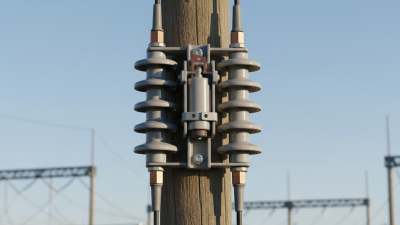
A shackle isolator, often called a shackle insulator, supports an overhead conductor while separating it electrically from its mounting hardware. It commonly uses porcelain or a weather-resistant polymer body. A top groove holds the conductor, while a bolt, pin, or metal bracket fixes the unit to a cross-arm or wall. The compact shape suits low-voltage and selected medium-voltage distribution systems.

Its operating principle is straightforward. The insulating body resists current flowing toward the support. Its profile also creates a creepage path along the surface. Longer creepage distances help control leakage current in rain, dust, or coastal conditions. Mechanical strength matters equally. Wind, conductor tension, vibration, and ice can stress the assembly. A reliable design balances dielectric performance with load resistance.

From field inspections, surface contamination often causes more concern than appearance suggests. A clean sample may perform well, yet dust can collect inside small grooves. Buyers should verify rated voltage, working load, dimensions, material, temperature range, and applicable test reports. Check puncture resistance, wet power-frequency performance, and aging results where available. Packaging deserves attention too. Chips around bolt holes can remain unnoticed until installation. I have also seen drawings omit the actual fitting clearance, creating avoidable site adjustments. That weakness deserves careful review. A catalog image is never enough.

Key Performance Specifications for Comparing Shackle Isolators

Top 10 Shackle Isolators for Global Buyers

When comparing shackle isolators, begin with rated voltage and insulation performance. A suitable unit should match the network’s operating voltage, not merely exceed it on paper. Check dry and wet withstand values, because rain can expose weak insulation quickly. Creepage distance also matters in coastal, dusty, or industrial areas. Longer creepage paths usually reduce surface leakage, but they may increase size and installation effort.

Mechanical strength deserves equal attention. Compare the specified failing load with the cable tension used in service, including wind and ice conditions. Confirm the hole diameter, mounting width, and conductor groove dimensions before ordering samples. A mismatch can leave the isolator secure in the warehouse but unstable on a pole. Materials should resist ultraviolet exposure, temperature changes, moisture, and corrosion. Porcelain offers strong heat stability, while polymeric materials can reduce weight and handling effort.

Reliable comparison requires evidence, not attractive photographs. Request dimensional drawings, routine test records, material details, and batch traceability. Check whether tests follow recognized international or regional standards relevant to the installation site. A clean datasheet is not proof of field performance. Installation quality, hardware pressure, and storage conditions can change results. This point is easy to overlook. Buyers should also compare service life claims with actual environmental data, although long-term predictions are never perfectly certain.

Top 10 Shackle Isolator Types for Global Buyers

Top 10 Shackle Isolator Types for Global Buyers

Shackle isolators support low-voltage overhead conductors and service connections. Their shape is compact, but selection requires careful checking. Common types include porcelain shackle isolators, polymer shackle isolators, glass-reinforced polymer units, spool-style isolators, and tie-top shackle isolators. Each type handles electrical stress, weather exposure, and mechanical loading differently. Porcelain offers strong heat resistance and familiar inspection characteristics. Polymer designs usually weigh less and resist impact better. However, polymer quality varies between formulations.

Other useful options include clevis-mounted shackle isolators, bolt-on shackle isolators, grooved conductor isolators, anti-tracking isolators, and high-creepage shackle isolators. Clevis mounting can simplify replacement in crowded structures. Grooved designs help maintain conductor alignment. Anti-tracking surfaces matter in coastal or polluted environments. High-creepage designs provide longer leakage paths for humid locations. That detail is easy to overlook.

Global buyers should compare rated voltage, breaking load, creepage distance, conductor size, and mounting dimensions. Request routine test records and material specifications. Check ultraviolet resistance for exposed installations. Salt, dust, vibration, and temperature changes can shorten service life. A visually clean unit may still contain hidden cracks or weak hardware. I once treated appearance as sufficient evidence; that was poor practice. Compatibility should be verified against the complete assembly, not the isolator alone. Local installation conditions often challenge catalog assumptions.

Top 10 Shackle Isolator Types for Global Buyers
No. Shackle Isolator Type Typical Material Typical Rated Voltage Typical Mechanical Strength Typical Dimensions Mounting Arrangement Common Applications Common Standard Reference
1 Porcelain Spool Shackle Isolator Glazed electrical porcelain with galvanized steel hardware Up to 1 kV Approximately 8–15 kN Length: 75–100 mm
Diameter: 65–90 mm
Mounted on a galvanized bolt, bracket, or cross-arm pin Low-voltage overhead lines, service drops, and short-span conductors ANSI C29.3; local utility specifications
2 Porcelain Tie-Top Shackle Isolator High-strength glazed porcelain Up to 1 kV Approximately 10–18 kN Length: 85–115 mm
Diameter: 70–95 mm
Conductor secured in a top groove with a tie wire or approved clamp Compact low-voltage distribution and straight-line pole positions ANSI C29.3; utility construction standards
3 Polymer Shackle Isolator UV-stabilized polymer housing with galvanized or stainless-steel insert Up to 1 kV Approximately 5–12 kN Length: 70–110 mm
Diameter: 55–85 mm
Bolted through a bracket or attached to a service-drop fitting Coastal, humid, and vibration-prone low-voltage networks IEC 61109 principles may apply to composite insulation; project specification required
4 Composite Shackle Isolator with Silicone Sheds Fiberglass-reinforced core with silicone rubber weather sheds Up to 1 kV Approximately 8–15 kN Length: 90–130 mm
Diameter: 60–90 mm
Bolted or clamped to a pole bracket or compact cross-arm Polluted environments, high humidity, and areas requiring low mass IEC 61109 design principles; manufacturer test report required
5 Double-Groove Porcelain Shackle Isolator Glazed porcelain with two conductor grooves Up to 1 kV Approximately 10–18 kN Length: 90–120 mm
Diameter: 75–100 mm
Installed on a bolt or bracket; supports alternative conductor positions Corner poles, angle sections, and installations requiring flexible routing ANSI C29.3 or equivalent national requirements
6 Heavy-Duty Porcelain Shackle Isolator High-strength porcelain with reinforced metal fittings Up to 1 kV Approximately 15–25 kN Length: 100–135 mm
Diameter: 85–115 mm
Heavy-duty cross-arm bracket or through-bolt assembly Longer spans, higher conductor tension, and exposed distribution routes ANSI C29.3; purchaser mechanical-load specification
7 Service-Drop Shackle Isolator Porcelain or UV-resistant polymer with corrosion-resistant hardware Up to 1 kV Approximately 5–10 kN Length: 65–100 mm
Diameter: 50–80 mm
Small pole bracket, wall bracket, or service-entry fitting Residential and commercial service connections Local low-voltage wiring and utility standards
8 Neutral-Support Shackle Isolator Porcelain or composite insulating body with a central support groove Up to 1 kV Approximately 8–15 kN Length: 75–115 mm
Diameter: 60–90 mm
Mounted on a neutral bracket or compact messenger support Bundled conductors, neutral conductors, and low-voltage aerial systems IEC 60383 test principles may be referenced; national utility code applies
9 Anti-Tracking Shackle Isolator Hydrophobic silicone rubber or specially glazed porcelain Up to 1 kV Approximately 6–14 kN Length: 80–125 mm
Diameter: 60–95 mm
Bracket, bolt, or clamp mounting depending on the network design Industrial, dusty, saline, and chemically polluted environments IEC 60507 pollution-performance testing may be applicable
10 Compact Low-Profile Shackle Isolator Porcelain or reinforced polymer with a reduced-height body Up to 1 kV Approximately 5–12 kN Length: 60–95 mm
Diameter: 55–80 mm
Compact bracket or space-constrained pole hardware Dense urban networks, narrow rights-of-way, and compact service assemblies ANSI C29.3 or applicable national low-voltage standard
Data shown are typical purchasing ranges for comparison only. Final selection should be based on system voltage, conductor diameter, span length, pollution severity, short-circuit forces, environmental exposure, applicable national standards, and verified manufacturer test data.

Application, Load, and Environmental Suitability Assessment

Top 10 Shackle Isolators for Global Buyers?

Application, Load, and Environmental Suitability Assessment

A useful top-ten comparison should begin with the job, not the catalogue photograph. Is the isolator used on lifting equipment, marine hardware, construction lines, or electrical protection? Each application creates different failure risks. Check the working load limit, breaking strength, safety factor, and connection geometry. A device rated for a static 2-ton load may perform poorly under repeated shock loading. Allow for side loading, vibration, and uneven force. These details are often missed.

Field evaluation should include material traceability, dimensional inspection, and clear test records. Confirm whether the stated load applies to the complete assembly or one component only. A practical sample check can reveal pin mismatch, rough edges, or inaccurate hole spacing. Small defects matter. Installation instructions should explain torque, alignment, inspection intervals, and replacement limits. If instructions are vague, the product deserves a lower position.

Environmental suitability changes the ranking again. Coastal users need strong corrosion resistance against salt spray and trapped moisture. Outdoor projects also require protection from ultraviolet exposure, mud, freezing temperatures, and sudden heat. Chemical plants may need compatibility data for oils, solvents, or cleaning agents. Do not assume a coating solves every problem. It may hide surface damage. A spreadsheet can look precise but still overlook real handling conditions. Recheck the decision with a competent lifting or safety engineer before purchase.

International Standards, Sourcing, and Quality Verification Criteria

Top 10 Shackle Isolators for Global Buyers?

Global buyers should treat shackle isolators as safety components, not simple molded parts. The correct specification must define voltage class, creepage distance, mechanical load, temperature range, and exposure conditions. Applicable IEC, EN, or ASTM requirements should be agreed before quotation. ISO Survey 2023 recorded more than 1.26 million ISO 9001 certificates worldwide, yet certification alone does not prove product performance.

Sourcing teams should request drawings, material declarations, batch numbers, and complete type-test reports. Reports should identify test methods, laboratory accreditation, sample quantities, and failure limits. An ISO/IEC 17025-accredited laboratory provides stronger evidence than an internal inspection sheet. Verify dry and wet withstand voltage, mechanical strength, tracking resistance, UV ageing, and dimensional stability. Small gaps can create field problems.

Material traceability deserves attention. World Steel Association data reported about 1.89 billion tonnes of crude steel production in 2023, showing how broad the supply chain can be. Ask suppliers to connect raw-material certificates with finished batches. Factory audits should compare records with actual production lines. I have found that photographs are useful, but not enough. A polished report may still hide weak sampling, incomplete retesting, or unclear acceptance criteria. Buyers should allow independent pre-shipment inspection and retain samples for future comparison.