Leave Your Message

Top Disc Composite Isolator Suppliers for Global Buyers

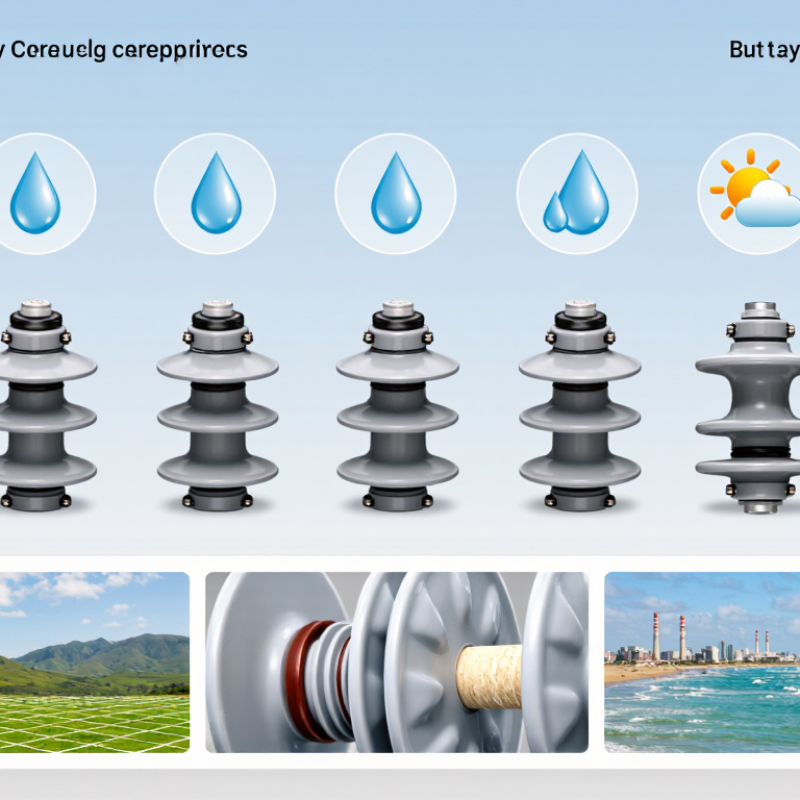
Choosing reliable suppliers requires more than comparing prices. A Disc Composite Isolator must withstand electrical stress, wind, pollution, ultraviolet exposure, and sudden temperature changes. Its silicone rubber housing should remain hydrophobic, while the core, sheds, and metal fittings must work as one system.

Professor Ravi S. Gorur, a recognized authority on outdoor insulation, has emphasized that “insulator performance depends on both design and environment.” That principle matters for global buyers. A product proven in a clean inland grid may behave differently near a salty coastline or industrial zone. Supplier evaluation should therefore include material specifications, factory testing, type-test evidence, and field experience. Look closely at shed design, fiberglass rod quality, crimping accuracy, sealing methods, and aging resistance. Small defects can become expensive outages.

No ranking is flawless. Buyer priorities vary.

This guide introduces leading Disc Composite Isolator suppliers for international procurement teams. It considers manufacturing capability, quality management, testing resources, delivery reliability, customization, and after-sales support. Strong suppliers should provide traceable documentation and respond clearly to technical questions. They should also explain limitations, not only advertise advantages. That honesty is often overlooked.

Practical details matter. Ask for test records, inspection procedures, and batch identification. Confirm compliance with relevant IEC requirements and project specifications. Review references from similar voltage classes and environmental conditions. The best supplier is not always the largest one. It is the partner that can consistently deliver safe, verified, and application-appropriate insulation. Mistakes remain possible, even with careful selection. Constant review is necessary.

Top Disc Composite Isolator Suppliers for Global Buyers

What Are Disc Composite Isolators and How Do They Work?

Disc composite isolators are engineered devices that reduce earthquake and vibration forces before they reach a structure. They commonly combine alternating elastomeric layers, reinforcing plates, and a central sliding or damping element. The disc geometry allows controlled horizontal movement while maintaining vertical load capacity. Think of a heavy building resting on carefully tuned cushions.

During seismic motion, the isolator lengthens the structure’s natural period. This can reduce the acceleration transferred to floors, equipment, and sensitive interiors. The elastomer provides restoring force, while friction or viscous components dissipate energy. According to FEMA seismic design guidance, extending a building’s period from roughly 0.5 seconds toward two seconds can significantly lower spectral acceleration in many earthquake zones. Actual performance depends on soil, weight, temperature, and installation quality.

A 2024 global seismic isolation market report projected steady growth of more than 6% annually through the decade, reflecting stronger demand for resilient infrastructure. However, market forecasts are not design evidence. Engineers still need cyclic testing, compression data, aging assessments, and site-specific calculations. ISO 22762 testing procedures are commonly referenced for elastomeric isolators. Small alignment errors matter. Dust, uneven loading, or restricted movement can weaken the intended response. Field inspections often reveal conditions that drawings miss, so supplier evaluation should include traceable test records, qualified manufacturing, and practical installation support.

Top Disc Composite Isolator Suppliers for Global Buyers

What Are Disc Composite Isolators and How Do They Work?

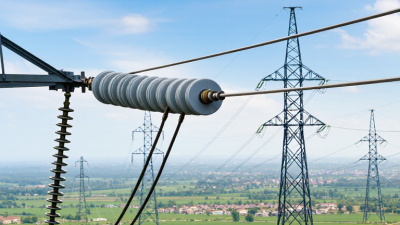
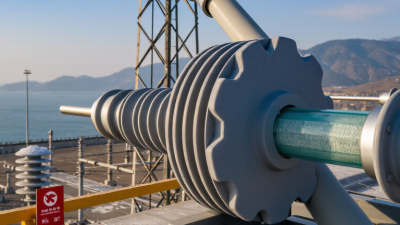
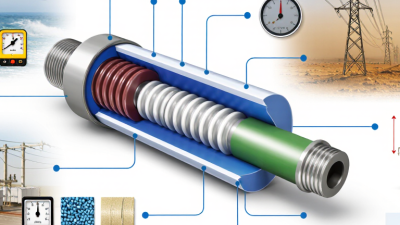
Disc composite isolators combine a fiberglass-reinforced polymer core with a weather-resistant silicone-rubber housing. The housing provides multiple sheds that increase the creepage path, while the core carries mechanical tensile loads and the end fittings connect the isolator to the conductor and tower.

The chart shows the minimum specific creepage-distance reference levels commonly used for pollution assessment under IEC 60815 guidance. Actual isolator selection depends on system voltage, site pollution, altitude, lightning performance, mechanical loading, and applicable national standards.

Key Performance Standards for Disc Composite Isolators

Top Disc Composite Isolator Suppliers for Global Buyers

Key Performance Standards for Disc Composite Isolators

Disc composite isolators must perform under electrical, mechanical, and environmental stress. Buyers should check compliance with IEC 62217 and relevant product standards. For overhead applications, IEC 61109 may also apply. Key tests include dry and wet power-frequency withstand, lightning impulse withstand, and partial discharge control. Mechanical ratings matter equally. Review tensile, cantilever, and torsional strength against the actual line design. A higher rating is not always better if it increases weight or installation difficulty.

The housing should resist tracking, erosion, ultraviolet exposure, and moisture penetration. Silicone rubber quality, interface sealing, and end-fitting design deserve close attention. Test reports should identify samples, procedures, dates, and laboratory competence. Vague certificates create unnecessary risk. Factory records, process controls, and traceability can reveal more than a polished catalog. Ask for temperature cycling, salt-fog, and aging evidence when equipment faces coastal or polluted conditions.

Tips: Compare test methods, not only headline values. Request drawings, installation limits, and inspection plans before ordering. Check whether the supplier can reproduce the tested design consistently. Small details matter, such as crimping control and sealant application. Field experience helps, but it is not a substitute for verified data. One practical warning remains: laboratory performance may not fully reflect unusual terrain, contamination, or transport damage. Allow room for engineering review and independent inspection.

How to Evaluate Global Disc Composite Isolator Suppliers

Top Disc Composite Isolator Suppliers for Global Buyers

How to Evaluate Global Disc Composite Isolator Suppliers

Global buyers should evaluate disc composite isolator suppliers beyond catalog images and polished claims. Start with application evidence: voltage class, mechanical load, pollution level, temperature range, and installation position. A capable supplier asks these questions before quoting. That matters. Request material data, dimensional tolerances, ageing results, and recent routine-test records. Check whether reports identify test methods, sample quantities, and dates. Vague certificates create avoidable risk.

Experience appears in production details. Ask how resin systems, fiberglass cores, and sheds are inspected during molding. Review controls for voids, uneven thickness, surface defects, and bonding strength. A factory audit can confirm curing equipment, calibrated gauges, clean storage, and batch traceability. Ask for a sample from a normal production lot, not a specially prepared piece. Compare its weight, dimensions, leakage performance, and visual finish with submitted drawings. Small differences can reveal larger consistency problems.

Reliability also depends on communication after the order. Clarify change-notification rules, replacement procedures, packaging, shipping protection, and technical response times. Check references from projects with similar climates and loads. One limitation deserves honesty: laboratory results cannot fully predict every field condition. Weather, maintenance, and installation quality still influence service life. Select a supplier willing to discuss failure modes, not one promising perfect performance. My scoring may be imperfect, but it makes hidden assumptions visible. Recheck the decision before signing.

Leading Supplier Regions and Manufacturing Capabilities

Global buyers often compare disc composite isolator suppliers by region, not price alone. East Asia offers large production capacity, automated molding, and competitive tooling costs. Many factories there produce silicone or EPDM housings, fiberglass-reinforced polymer cores, and galvanized metal fittings in one facility. South Asian suppliers can provide flexible batch sizes and practical customization for regional grid projects. European manufacturers often emphasize design verification, traceability, and strict process documentation. North American facilities commonly support utility specifications, replacement programs, and detailed inspection records.

Manufacturing capability should be checked at the process level. Look for controlled rubber injection or compression molding, accurate core winding, and stable metal crimping. A capable plant should maintain clean assembly areas and monitor curing temperature. It should also perform dimensional checks, mechanical load tests, aging tests, and electrical performance tests. Reports should identify test standards, sample numbers, dates, and equipment calibration status. Production records should connect each shipment to raw material batches.

A factory tour can reveal more than a polished brochure. Ask to see silicone mixing, mold maintenance, and final inspection stations. Supplier audits should examine worker training and corrective-action records. Not every large factory delivers consistent quality. Small suppliers may be more responsive, but their testing capacity can be limited. This is where buyers need caution. A supplier may meet one specification while missing installation details, packaging strength, or long-term weather exposure requirements. Regional expertise matters, yet independent verification remains necessary.

Top Disc Composite Isolator Suppliers for Global Buyers - Leading Supplier Regions and Manufacturing Capabilities
Supplier Region Typical Manufacturing Strengths Common Disc Composite Isolator Configurations Typical Application Voltage Classes Core Materials and Processes Quality and Testing Capabilities Export and Customization Profile Best Fit for Global Buyers
East Asia High-volume production, automated molding, CNC machining, and broad component sourcing for standard and customized electrical isolation assemblies. Disc-type isolators Post-and-disc assemblies Outdoor silicone-housed designs Metal-end-fitting options Commonly configured for medium- and high-voltage equipment, including 12 kV, 24 kV, 36 kV, 72.5 kV, 110 kV, and higher system classes, subject to design validation. Silicone rubber or EPDM housings, fiberglass-reinforced epoxy rods, galvanized steel or aluminum fittings, compression molding, injection molding, and crimping. Dimensional inspection, material verification, mechanical load testing, dielectric withstand testing, leakage-current checks, and routine production inspection. Applicable IEC requirements should be confirmed by product type. Strong container and consolidated shipment options; usually supports private-label-free technical production, drawings, samples, color requirements, and customized mounting interfaces. Buyers seeking competitive pricing, scalable production, broad customization, and mixed-volume sourcing from one manufacturing region.
Central and Western Europe Engineering-led production with emphasis on high-reliability designs, traceability, laboratory validation, and integration with high-voltage switchgear systems. High-voltage disconnecting assemblies Encapsulated composite supports Special-duty outdoor isolators Condition-monitoring-ready designs Frequently engineered for 36 kV to 245 kV classes and specialized transmission or substation applications, depending on creepage distance, insulation level, and system environment. High-performance silicone elastomers, resin-rich fiberglass cores, precision-machined stainless steel or coated steel fittings, controlled bonding, and tightly managed assembly tolerances. Strong capabilities in type testing, partial-discharge measurement, thermal cycling, salt-fog testing, pollution-performance assessment, mechanical load testing, and documented process traceability. Suitable for specification-driven projects; typically provides detailed technical files, inspection plans, drawings, certificates, and project-specific acceptance documentation. Utilities, grid operators, EPC contractors, and buyers prioritizing documented reliability, lifecycle performance, and compliance with detailed technical specifications.
North America Strong application engineering, retrofit support, utility project coordination, and production of components adapted to regional electrical and mechanical requirements. Substation isolator components Retrofit-compatible assemblies Heavy-duty outdoor designs Utility-specific mounting systems Common project requirements include medium-voltage distribution and high-voltage substation classes up to approximately 230 kV, depending on the equipment platform and utility specification. Silicone rubber, fiberglass-reinforced polymer cores, stainless steel, aluminum, galvanized steel, precision machining, compression molding, and engineered bonding systems. Factory acceptance testing, mechanical verification, electrical withstand testing, environmental qualification, dimensional reports, and utility-specific inspection documentation. Often suited to regional inventory, replacement programs, retrofit projects, and low-to-medium production runs requiring engineering review and local technical support. Utility maintenance programs, switchgear modernization, replacement-part sourcing, and projects requiring close alignment with local installation practices.
South Asia Growing production capacity for distribution and transmission components, with flexible labor-intensive assembly and increasing process automation. Distribution-class isolators Composite support discs Pole and substation components Project-specific fittings Frequently supplied for 11 kV, 22 kV, 33 kV, and selected higher-voltage applications, subject to creepage, insulation coordination, and local grid requirements. Silicone rubber or polymeric housings, fiberglass cores, galvanized steel fittings, aluminum components, compression molding, manual finishing, and mechanical crimping. Routine electrical tests, mechanical load checks, visual inspection, dimensional control, material certificates, and selected environmental tests; independent third-party testing may be required for major projects. Competitive for project quantities and customized fittings; buyers should verify production capacity, batch consistency, export packaging, and test-report authenticity. Cost-sensitive distribution projects, regional grid upgrades, and buyers requiring adaptable specifications with pre-shipment inspection.
Southeast Asia Expanding electrical-component manufacturing base with strengths in assembly, rubber processing, metal fabrication, and regional supply-chain integration. Medium-voltage isolators Outdoor polymeric assemblies Compact switchgear components Corrosion-resistant fittings Most commonly aligned with 6.6 kV, 11 kV, 22 kV, and 33 kV distribution systems, with selected high-voltage capability depending on the manufacturing facility. Weather-resistant silicone rubber, EPDM compounds, fiberglass-reinforced epoxy, stainless steel, coated steel, aluminum, and compression or transfer molding. Routine dielectric tests, mechanical inspection, salt-contamination evaluation, dimensional checks, and batch documentation; certification scope varies by manufacturer and destination market. Practical regional shipping routes and growing capability for export packaging, engineering samples, and moderate customization of dimensions and fittings. Buyers serving tropical, coastal, and rapidly developing distribution networks that need weather-resistant products and regional logistics flexibility.
Japan and South Korea Precision manufacturing, advanced materials control, strict process documentation, and high consistency for technically demanding electrical equipment. Precision composite discs High-reliability switchgear supports Compact insulated mechanisms Special-environment designs Commonly engineered for medium- and high-voltage switchgear, including 24 kV, 36 kV, 72.5 kV, 145 kV, and application-specific higher classes. High-grade silicone compounds, epoxy-glass composites, precision stainless steel, aluminum alloys, automated molding, controlled curing, and highly accurate machining. Detailed process control, partial-discharge testing, dielectric withstand testing, mechanical fatigue evaluation, dimensional measurement, environmental aging, and traceability by production lot. Strong for technically complex, compact, and high-consistency products; customization generally requires formal engineering review and longer qualification cycles. Buyers prioritizing low defect rates, compact designs, repeatability, and long-term performance in demanding switchgear or substation environments.
Middle East and Türkiye Regional production and project integration focused on dry, hot, dusty, and high-solar-radiation operating conditions. Outdoor substation isolators High-creepage designs Dust-resistant housings Heavy-duty mounting systems Common project classes range from 11 kV and 33 kV distribution systems to 132 kV, 220 kV, and higher transmission applications, depending on the project specification. UV-resistant silicone rubber, fiberglass-reinforced polymer, galvanized or stainless steel fittings, protective coatings, and designs with extended creepage distances. Dry-heat exposure assessment, UV resistance checks, pollution-performance evaluation, mechanical testing, dielectric testing, and project-specific inspection requirements. Useful for regional EPC supply, local-content programs, and projects requiring products adapted to high temperature, dust, and strong solar exposure. Buyers serving desert, semi-arid, coastal, and high-pollution environments where surface-performance and corrosion resistance are critical.
Latin America Regional assembly, utility-oriented project supply, metal fabrication, and adaptation to varied climatic conditions across distribution and transmission networks. Distribution switchgear isolators Substation replacement parts Outdoor composite supports Corrosion-resistant assemblies Frequently used in 13.8 kV, 23 kV, 34.5 kV, 69 kV, and selected higher-voltage systems, subject to national utility standards and insulation coordination. Silicone rubber, EPDM, fiberglass-reinforced epoxy, galvanized steel, stainless steel, aluminum, and protective coatings for humid or coastal environments. Routine electrical and mechanical tests, inspection documentation, environmental checks, and acceptance testing based on utility or EPC requirements. Regional sourcing can reduce delivery complexity for replacement programs; buyers should confirm local certification, customs requirements, and spare-part availability. Utility distribution upgrades, tropical and coastal installations, replacement projects, and buyers needing local project coordination.
Africa Primarily project-based supply, import distribution, local assembly, and adaptation for high-temperature, dusty, coastal, and infrastructure-expansion conditions. Medium-voltage distribution units Substation retrofit parts High-creepage outdoor designs Ruggedized assemblies Common requirements include 11 kV, 22 kV, 33 kV, 66 kV, and 132 kV systems, with higher classes determined by national grid and transmission-project specifications. UV-stable silicone rubber, fiberglass-reinforced polymer cores, galvanized or stainless steel fittings, and protective finishes for dust and corrosion exposure. Pre-shipment inspection, dielectric withstand tests, mechanical checks, visual and dimensional inspection, and independent laboratory verification for major infrastructure projects. Buyers should place particular emphasis on export packaging, spare units, documentation, field-service support, and guaranteed replacement availability. Grid-extension projects, substation rehabilitation, rural electrification, and installations exposed to severe heat, dust, or coastal corrosion.

Technical ranges are indicative industry application classes rather than guarantees for every supplier. Final selection should be verified against the required system voltage, lightning impulse withstand level, creepage distance, pollution class, mechanical load, environmental conditions, and applicable IEC, IEEE, or national standards.

Factors to Consider When Selecting a Reliable Supplier

Selecting a reliable disc composite isolator supplier requires more than comparing prices. Ask for material specifications, routine test reports, and evidence of production control. A dependable supplier should explain housing materials, core strength, sealing methods, and resistance to ultraviolet exposure. Vague answers deserve attention.

Request samples before placing a large order. Inspect surface finish, fittings, dimensions, and labeling. Review the supplier’s experience with similar voltage levels and operating environments. References from utility contractors can reveal delivery habits that brochures often miss. Check whether each unit has traceable batch records and documented inspection points.

Technical support matters after shipment. The supplier should provide installation guidance, storage instructions, and prompt responses to field questions. Confirm realistic lead times, packaging quality, replacement procedures, and warranty terms. Independent laboratory testing adds credibility, especially when performance claims seem unusually strong. A polished catalog can still hide weak process control.

No supplier is flawless. That is worth remembering. Ask how the company handles defects, delayed materials, and design changes. A transparent answer may be more valuable than a perfect sales presentation. Compare communication during the quotation stage, because slow or unclear replies can become serious problems during an urgent project. Reliable sourcing depends on verified evidence, practical testing, and a supplier willing to discuss limitations openly.