Why Low Voltage Systems Are Essential for Modern Electrical Infrastructure?
In the evolving landscape of modern electrical infrastructure, Low Voltage systems play a critical role. They are foundational in powering our homes, businesses, and industries. As urbanization accelerates, the demand for reliable power sources increases. Low Voltage solutions provide safety and efficiency in this dynamic environment.
These systems operate at lower energy levels, minimizing risks and ensuring user safety. For example, residential lighting and power outlets often rely on Low Voltage applications. Their implementation supports sustainable energy solutions. However, many underestimate their importance or overlook potential risks.
While Low Voltage systems offer several benefits, challenges remain. Infrastructure may face outdated components, causing inefficiencies. Regular maintenance is essential to optimize performance. Reflecting on these issues helps improve safety and efficacy in electrical systems. Recognizing the value of Low Voltage is vital for future innovation and infrastructure resilience.

The Definition and Scope of Low Voltage Systems in Infrastructure
Low voltage systems play a critical role in modern electrical infrastructure. They encompass electrical installations operating at voltages below 1,000 volts. This includes a wide range of systems, such as lighting, communications, and data transmission. Their importance lies in providing efficiency and safety within urban environments. Many buildings are now equipped with these systems to support advanced technology and energy management.
The scope of low voltage systems extends to various applications. They are vital in residential, commercial, and industrial settings. For instance, smart home technologies rely heavily on low voltage wiring. This ensures seamless integration with renewable energy sources. Additionally, these systems facilitate the efficient operation of security and fire alarm systems. Despite their benefits, the planning and installation of such systems can be challenging. A lack of understanding can lead to inefficiencies and safety risks. This highlights the need for skilled professionals in this field, ensuring standards are met.
Overall, low voltage systems enhance the reliability of infrastructure. However, ongoing training and assessment are necessary to adapt to evolving technologies. Each project presents unique challenges requiring tailored solutions. Continuous improvements and adherence to best practices are essential for optimal performance.
Key Advantages of Low Voltage Systems in Modern Electrical Networks
Low voltage systems are becoming vital in today's electrical framework. They improve safety and efficiency in various applications. With proper installation, they reduce the risk of electric shock. Lower voltages are inherently safer, making them ideal for residential and commercial settings.
These systems support smart technology integration. They enable seamless communication between devices. For example, low voltage lighting systems can operate via remote control. This empowers users to manage energy consumption better. Enhanced efficiency leads to cost savings in the long run.
Moreover, low voltage infrastructure tends to be easier to maintain. However, the complexity of installations can sometimes pose challenges. Understanding existing systems and upgrading them require expertise. This area still calls for further innovation to address ongoing issues effectively. As technology progresses, the role of low voltage systems within our electrical networks will continue to evolve.
Advantages of Low Voltage Systems in Modern Electrical Infrastructure
Applications of Low Voltage Systems Across Various Industries
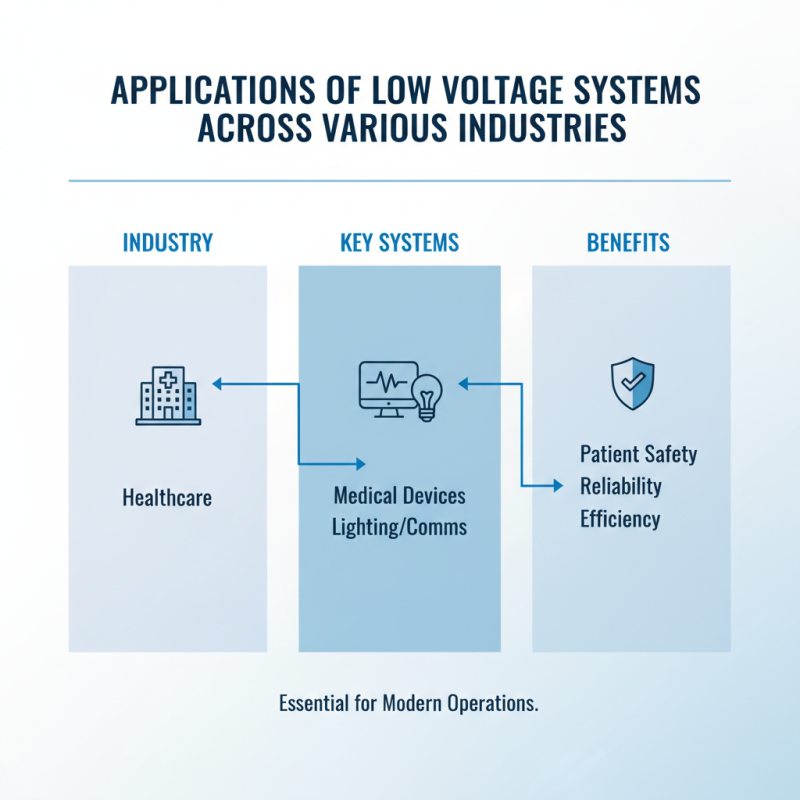
Low voltage systems play a critical role across various industries today. In healthcare, for instance, these systems support essential machinery. Medical devices such as monitors and imaging equipment rely on low voltage for their operations. This ensures patient safety and device reliability. Hospitals increasingly use low voltage systems for lighting and communication, enhancing efficiency.
In the construction industry, low voltage systems are essential for security and automation. They power surveillance cameras and access control systems. Such integration allows for real-time monitoring and increased safety on job sites. Smart buildings also depend on low voltage for energy management, significantly reducing operational costs.
In the retail sector, low voltage systems enable effective inventory management. RFID technology, a component of low voltage systems, helps track items smoothly. It minimizes loss and optimizes stock levels. Yet, organizations must consider challenges like system integration and maintenance. Addressing these can enhance performance and reliability. Overall, low voltage systems are indispensable for modern electrical infrastructure.
Challenges and Considerations in Implementing Low Voltage Systems
Low voltage systems have become integral to modern electrical infrastructure. They offer numerous advantages, yet implementing these systems is not without challenges. One key consideration is the initial cost. While low voltage solutions can lead to savings over time, the upfront investment can deter organizations. According to a report by the International Electrotechnical Commission, around 30% of project budgets can be consumed by the transition to low voltage systems.
Another challenge lies in standardization. The lack of universal standards can create compatibility issues among various equipment. This inconsistency complicates installations and maintenance. A study from the Institute of Electrical and Electronics Engineers highlights that about 25% of low voltage system failures are linked to poor compatibility between components. Ensuring interoperability must be a priority during the design phase.
Additionally, training and expertise are critical. Many professionals lack experience with low voltage technology. This gap can lead to improper installations, affecting safety and efficiency. Research from the National Electrical Contractors Association indicates that ongoing training can boost project success rates by up to 40%. Bridging this knowledge gap is essential for harnessing the full potential of low voltage systems.
Why Low Voltage Systems Are Essential for Modern Electrical Infrastructure? - Challenges and Considerations in Implementing Low Voltage Systems
| Dimension |
Description |
Challenges |
Considerations |
| Safety |
Low voltage systems reduce the risk of electrical shock. |
Ensuring compliance with safety standards. |
Regular safety audits and training for personnel. |
| Efficiency |
Optimized energy consumption and loss reduction. |
Integration with existing infrastructure can be complex. |
Conducting a thorough energy audit prior to implementation. |
| Cost |
Lower installation and maintenance costs compared to high voltage systems. |
Initial setup may involve high upfront costs. |
Analyze return on investment and long-term savings. |
| Scalability |
Easy to expand as demand increases. |
Ensuring compatibility with future technologies. |
Design systems with future expansion in mind. |
| Connectivity |
Supports modern smart devices and IoT integration. |
Cybersecurity risks associated with increased connectivity. |
Implement robust cybersecurity measures and protocols. |
Future Trends in Low Voltage Technology and Infrastructure Development
Low voltage systems are rapidly evolving, shaping the future of electrical infrastructure. According to the International Electrotechnical Commission (IEC), low voltage installations are projected to account for up to 60% of global electrical market growth by 2030. This growth directly correlates with the increasing demand for energy-efficient solutions and smart technology integration. The rise of smart cities relies heavily on low voltage technology. These systems support automation, enhanced communication, and efficient energy distribution, making them indispensable.
Recent studies from MarketsandMarkets highlight that the global low voltage switchgear market alone is expected to reach $60 billion by 2025. This anticipated growth illustrates the critical role of low voltage systems in improving operational efficiency and meeting sustainability goals. However, challenges remain. Many infrastructures still operate outdated voltage systems, leading to inefficiencies. Upgrading these systems can be costly and complex. Stakeholders must navigate regulatory frameworks that often slow down implementation.
Technical advancements continue to emerge, particularly regarding renewable energy integration in low voltage systems. Innovations in energy storage and management are essential. However, these technologies must be implemented thoughtfully. A rush to adopt new solutions without adequate planning can lead to systemic failures. As low voltage technology becomes crucial for modern infrastructure, careful consideration and holistic planning are key to ensuring its success.