2026 How to Choose the Right Disc Composite Isolator for You?
Choosing the right Disc Composite Isolator can vastly improve your project’s efficiency. Many factors influence this decision, from environmental conditions to material properties. With a variety of options available, making the right choice can feel overwhelming.
It is crucial to understand the specific needs of your application. Each is designed for unique situations and requirements. A Disc Composite Isolator often offers superior performance under challenging conditions. However, selecting the wrong one may lead to premature failure or suboptimal performance.
Consulting experts can provide valuable insights. They can help navigate the technical details you may overlook. Your decision should combine experience and the right knowledge. Ultimately, the goal is a robust solution that stands the test of time. Recognizing the limits of your understanding is beneficial. Seek feedback and be open to learning.
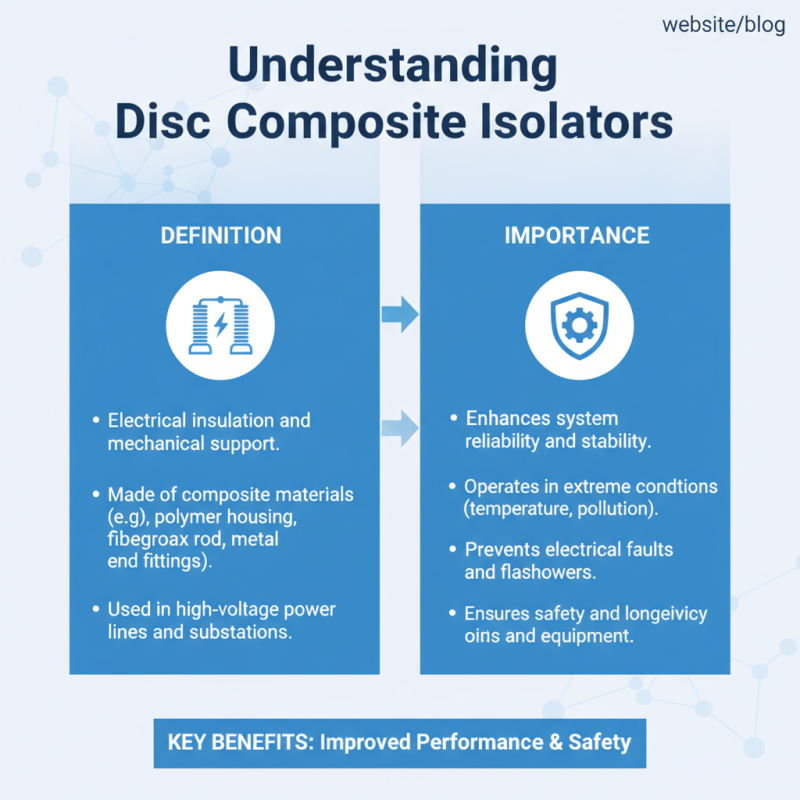
Understanding Disc Composite Isolators: Definition and Importance
Disc composite isolators play a crucial role in various applications, especially in the field of electrical engineering. They provide insulation and mechanical support for electrical equipment, helping to maintain stability in systems that operate under extreme conditions. Understanding their significance can lead to better performance and safety in your operations.
When selecting a disc composite isolator, consider the environmental conditions and application needs. For example, temperature fluctuations and humidity levels can impact the isolator's performance. Look for materials that resist moisture and can handle thermal expansion. Remember, a poorly chosen isolator can lead to equipment failures or inefficient operation, prompting costly repairs.
Tips: It's essential to evaluate the voltage ratings as well. Make sure the isolator can handle your system's electrical load. Additionally, pay attention to the mechanical strength specifications. An isolator that can't withstand physical impacts may compromise your setup. Conducting thorough research can aid in making an informed choice. Experience shows that consulting with industry experts often provides insights that are not immediately apparent.
Key Factors in Selecting the Right Disc Composite Isolator
Choosing the right disc composite isolator is crucial for optimal performance. Key factors include material properties, load capacity, and environmental conditions. Understanding these elements can significantly affect the longevity and effectiveness of your isolator.
Material selection is foundational. Composite materials offer versatility, but not all are equal. Some may not withstand extreme temperatures or chemical exposure. Investigating the specific operational environment is essential. Also, consider the isolator's load capacity. An undersized isolator can lead to failure. It may create costly downtime or even safety hazards.
Installation practices play a role too. Proper alignment and support contribute to performance. Even minor misalignments can lead to increased wear. Examine past installations critically. Address any shortcomings or unexpected issues. Optimizing choices might require adjustments, but the results are worth it. Take time to evaluate your options thoroughly. This diligence ensures reliability and efficiency.
2026 How to Choose the Right Disc Composite Isolator for You? - Key Factors in Selecting the Right Disc Composite Isolator
| Factor |
Description |
Importance Level (1-5) |
| Material Type |
The choice between polymer, ceramic, or hybrid materials. |
5 |
| Load Capacity |
Determining the maximum load the isolator can handle. |
4 |
| Temperature Resistance |
Isolators need to perform in varying temperatures. |
4 |
| Frequency Range |
Ability to isolate vibrations within certain frequency ranges. |
3 |
| Compliance |
The degree of flexibility required for the application. |
5 |
| Installation Ease |
How straightforward the installation process is. |
3 |
| Cost-effectiveness |
Balancing quality and price for long-term value. |
4 |
Comparative Analysis of Various Disc Composite Isolator Materials
When selecting a disc composite isolator, material choice is critical. Several materials are commonly utilized, including glass fiber reinforced polymer (GFRP), carbon fiber reinforced polymer (CFRP), and epoxy resins. Each material has its own characteristics. A 2022 industry report indicates that GFRP has a tensile strength of around 500 MPa, while CFRP can reach up to 1200 MPa. This significant difference makes CFRP suitable for high-load applications.
The performance of isolators depends on temperature and environmental factors as well. GFRP is more resistant to corrosion, which makes it ideal for harsh conditions. Conversely, CFRP excels in high-temperature scenarios but can be more expensive. A comparative analysis shows that the lifespan of GFRP can be approximately 20 years in outdoor conditions, while CFRP components may degrade quicker in certain environments.
Many overlook the importance of a detailed performance analysis. Not every application requires the high performance of CFRP. In some situations, GFRP may provide sufficient strength at a lower cost. Evaluating the specific requirements of your project is essential. Is a longer lifespan or lower weight more important to you? Each choice presents its own set of trade-offs. Understanding these nuances can lead to better decisions in selecting an isolator.
Comparative Analysis of Various Disc Composite Isolator Materials
This chart presents a comparative analysis of the strength and thermal resistance of various disc composite isolator materials. The data emphasizes the selection criteria for choosing the right isolator based on performance metrics.
Common Applications for Disc Composite Isolators in Industry
In various industries, disc composite isolators play a crucial role in minimizing vibrations. These isolators are commonly employed in machinery, automotive, and aerospace applications. They enhance performance by providing superior shock absorption and protection against environmental stresses. In settings where precision is vital, using the right isolator can significantly impact productivity.
When selecting a disc composite isolator, consider its application. For instance, heavy machinery might require isolators with higher load capacities. Conversely, delicate instruments benefit from lighter options. Always evaluate the specific needs of your equipment and environment.
Tips: Always consult with industry experts. They can provide personalized advice based on your unique requirements. Assess materials used in isolators. Durability and resistance to chemicals can greatly affect performance. Potential users sometimes overlook this factor. Breaking these habits will lead to better choices for isolators in the long run.
Maintenance Tips for Ensuring Longevity of Disc Composite Isolators
For optimal performance of disc composite isolators, maintenance plays a crucial role. Regular inspections can prevent major failures. According to industry reports, nearly 25% of isolator failures stem from insufficient maintenance. This statistic highlights the need for vigilance.
Routine checks should include examining insulation integrity and physical wear. If surface degradation is noticed, replacement may be necessary. Some isolators have a lifespan of 10-15 years, but without proper care, this can be significantly shortened. It’s essential to document any irregularities during inspections.
Cleanliness is also vital for longevity. Dust and debris can accumulate, leading to insulation breakdown. Studies suggest that simple cleaning protocols can enhance the lifespan by up to 20%. However, many professionals overlook this task. Regularly cleaning isolates can mitigate exposure to harmful contaminants and contribute to better performance. Small efforts in maintenance can yield substantial benefits down the line.