What Is a Glass Isolator and How Does It Work?
In the realm of photonics, the term "Glass Isolator" stands out for its crucial role. Dr. Emily Roberts, a leading expert in optical components, states, "Glass isolators are vital for preventing unwanted feedback in laser systems." This highlights their importance in maintaining the integrity of laser performance.
Glass isolators utilize the Faraday effect to protect sensitive components. They allow light to pass in one direction while blocking it in the opposite direction. This one-way functionality is essential in applications ranging from telecommunications to medical devices. However, there are challenges too. Not all materials can achieve the desired performance levels consistently.
Understanding glass isolators means acknowledging both their capabilities and limitations. While they enhance system reliability, their effectiveness can vary based on design and material quality. Experts like Dr. Roberts encourage ongoing research to refine these devices further. With advancements, the potential applications of glass isolators continue to expand, emphasizing the need for deeper exploration in this field.
What Is a Glass Isolator and Its Role in Optical Systems?
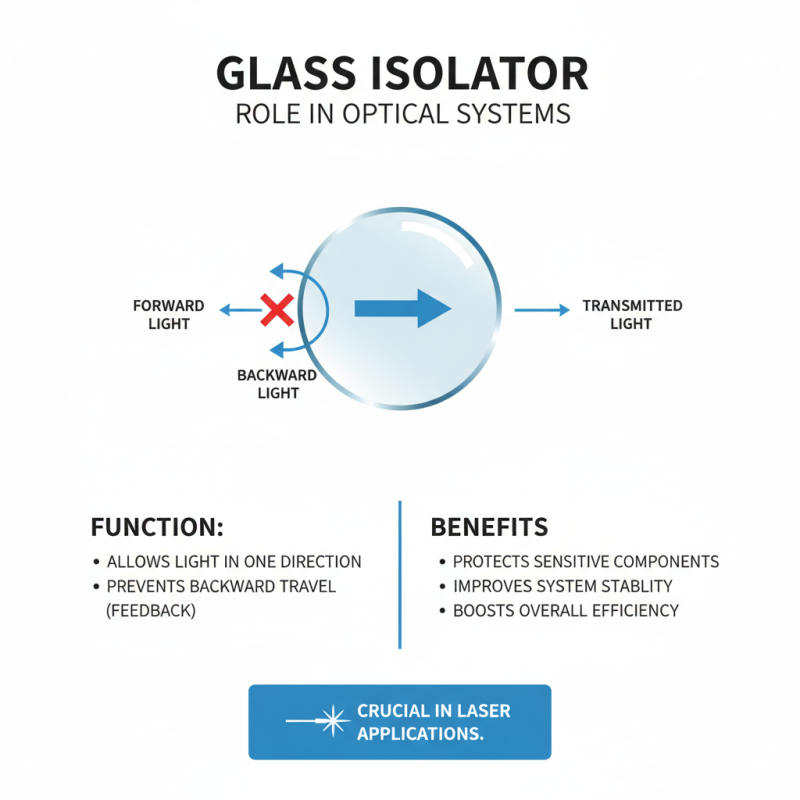
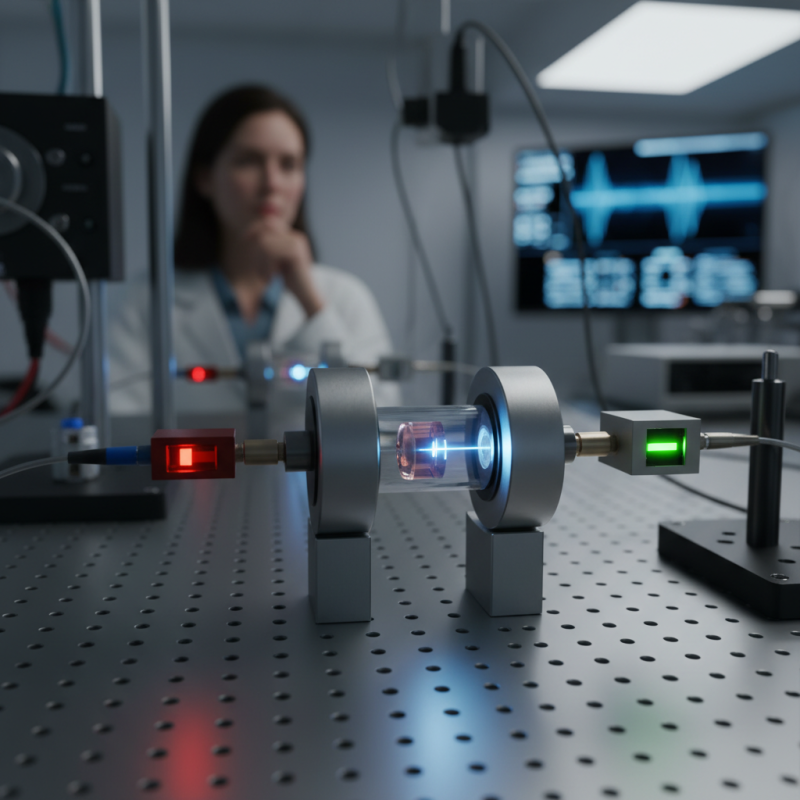
A glass isolator is an essential component in optical systems. Its main function is to allow light to pass in one direction while preventing it from traveling backward. This unidirectional behavior protects sensitive components from destabilizing feedback. For instance, in laser applications, any reflection can degrade performance. The isolation provided ensures stability and improves overall efficiency.
The role of a glass isolator extends beyond just protection. It can enhance signal integrity and minimize noise in optical setups. In telecommunications, glass isolators are used to maintain clear transmission paths. Their design often incorporates birefringent crystals, influencing how light interacts within the device. Understanding this interaction is crucial for optimizing system performance.
Yet, glass isolators are not without limitations. Factors like temperature sensitivity can affect their reliability. Production imperfections might lead to inconsistent performance. Addressing these issues requires a careful balance between innovation and practicality. The challenge lies in continuously improving these devices while maintaining their fundamental purpose.
Key Components of Glass Isolators: Structure and Materials
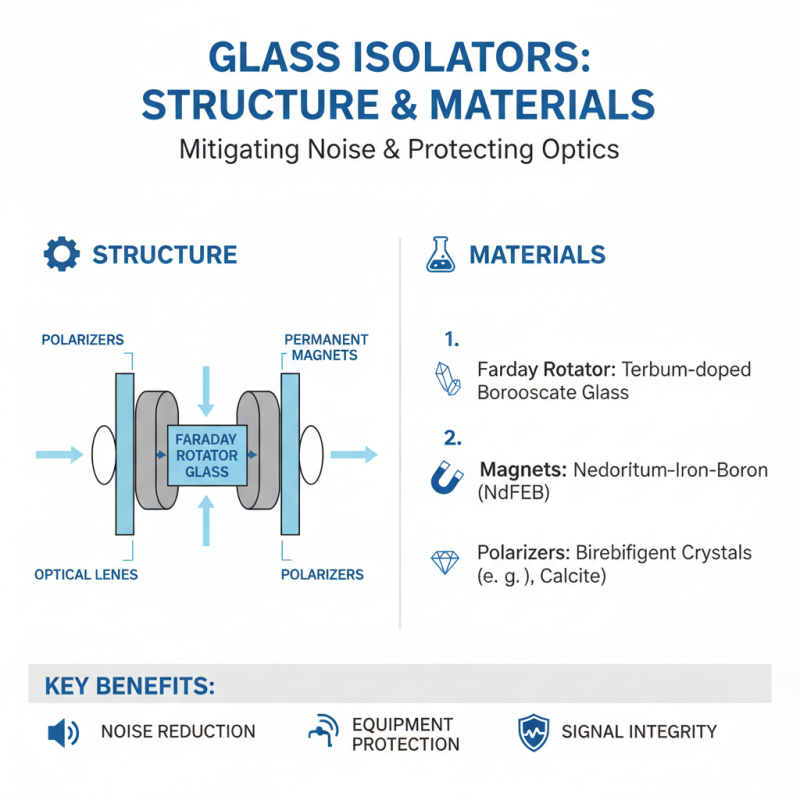
Glass isolators are essential components in various optical systems. They help mitigate noise and protect sensitive equipment. Understanding their structure and materials can enhance their effectiveness.
The primary structure of a glass isolator consists of optical materials that allow specific wavelengths to pass through while blocking others. Typically, these isolators use high-quality glass, designed to minimize distortion. The coatings on these glass components also play a crucial role. They ensure that light reflects appropriately, maintaining the desired signal integrity.
Materials used in glass isolators go beyond just simple glass. Specialty glasses are often chosen for their performance under specific conditions. For instance, borosilicate glass offers high resistance to thermal shock. However, using different materials can introduce challenges. Compatibility issues may arise when integrating various elements into one system. This necessitates careful selection and testing to ensure reliability in operation.
Working Principles of Glass Isolators: Mechanisms of Light Control
Glass isolators are essential components in laser systems and optical communications. They control light through specific mechanisms. Understanding how these isolators work enhances their application in various technologies.
The functioning of glass isolators relies on the Faraday effect. This phenomenon activates a material when placed in a magnetic field. As light passes through this material, its polarization alters. This shift allows light to travel in one direction while blocking reverse flow.
However, achieving optimal performance is not always simple. Environmental factors can alter effectiveness. Dirty optics or temperature changes may impact functionality. Users need to regularly maintain these components for reliability, ensuring consistent operation over time. Despite challenges, glass isolators remain vital in modern photonics, warranting thoughtful integration into systems.
Applications of Glass Isolators in Telecommunications and Industry
Glass isolators play a pivotal role in
telecommunications and industrial applications. Their unique design helps prevent unwanted reflections
in optical systems. In the telecommunications sector, they ensure signal integrity, which is
crucial for data transmission. According to a 2022 study by Global Industry Analysts, the market for
optical isolators is expected to grow significantly, reaching over $1 billion by 2026. This growth is driven largely by
the increasing demand for high-speed internet services.
Industries such as healthcare and
manufacturing also benefit from glass isolators. They protect sensitive equipment from harmful
back reflections. In laser applications, they safeguard the performance of optical components. However, it is essential to consider the
challenges that come with different operational environments. For example, exposure to extreme temperatures can affect the performance of
glass isolators. Regular maintenance and monitoring could address these risks and enhance reliability.
Moreover, integrating glass isolators into existing systems may pose difficulties. Engineers must ensure compatibility with other components.
An outdated setup might not accommodate modern isolators effectively. This can lead to inefficiencies
in system performance. Continued research and development are necessary to optimize these devices and address their limitations within diverse
applications.
Performance Metrics: Analyzing Loss and Isolation Ratios in Glass Isolators
Glass isolators are essential components in optical systems. They help manage light transmission while minimizing undesirable reflections. A key aspect of their performance lies in analyzing loss and isolation ratios. These metrics provide insight into how effectively an isolator maintains signal integrity and suppresses back reflections.
Loss ratios indicate the amount of light lost as it passes through the isolator. High levels suggest inefficiencies, potentially impacting system performance. Isolation ratios, on the other hand, measure how well the device blocks unwanted light. Achieving high isolation ratios is critical for systems sensitive to interference. Sometimes, manufacturers report impressive numbers, but real-world performance may differ. This discrepancy can prompt a reevaluation of the discussed specifications.
It's important to note that variations in the design and materials can affect these metrics. Regular testing and independent verification can enhance reliability. Engineers must consider these factors when selecting isolators for specific applications. While manufacturers provide data, assessing real-world conditions often reveals additional insights. The quest for optimal performance continues, as technology evolves and demands increase.
Performance Metrics of Glass Isolators
This chart represents the performance metrics of various glass isolators, analyzing loss and isolation ratios. The data illustrates how different glass isolators perform in terms of optical loss and isolation efficiency.